
If you sell online, you have probably compared monthly platform fees to a one-time custom build and stopped there. The problem is that most hosted stores charge two kinds of money: a predictable subscription, and a percentage of every sale that quietly scales with revenue. For a growing microbusiness, the second line item is often what makes the true cost of ownership surprising — and it is exactly what makes a break-even conversation worth having before you commit for years.
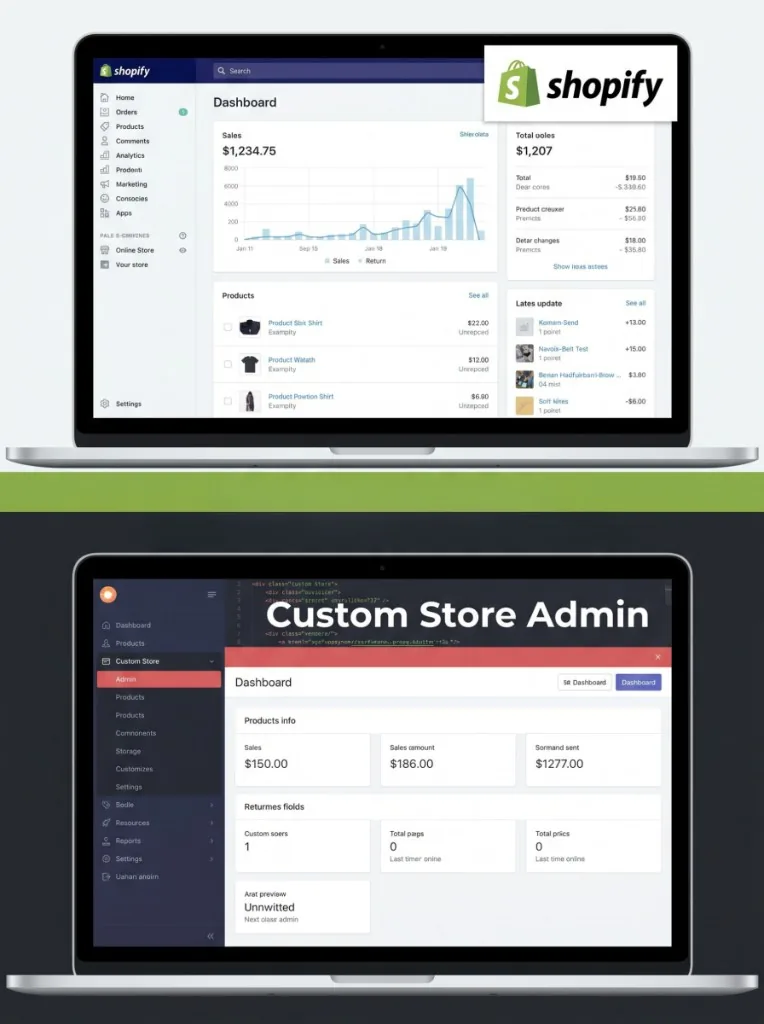
The Two-Line-Item Trap: Subscription + Transaction Fees
Shopify is the name most owners search for first, and for good reason: polished checkout, app ecosystem, and clear plan tiers. But each tier pairs a monthly price with card-processing percentages that apply to gross sales (plus per-transaction cents we do not model in our simple calculator — always confirm with your processor or Shopify’s current docs).
You should apply the same mental model to competitors:
- Squarespace Commerce — bundled site + store; commerce tiers add listing limits and lower or eliminate extra transaction fees when you use their checkout stack.
- Wix eCommerce — tiered business plans with similar subscription + processing logic.
- BigCommerce — SaaS storefront with annual caps on sales at lower tiers; when you outgrow a tier, the monthly fee jumps.
- WooCommerce on WordPress — often marketed as “free software,” which is true for the plugin license, but not true for the real-world stack: hosting, SSL, backups, security updates, premium extensions, and still — card processing. We treat that as a monthly stack estimate in the calculator so you are not comparing custom hosting to a fantasy $0 Woo number.
Break-even, in the simplified sense we use here, is the point where cumulative hosted-store spend (subscription + estimated processing) crosses the upfront custom build fee you would otherwise pay once, plus the ongoing hosting and maintenance you expect for a hand-built site. It is not a promise — it is a planning lens. Real life adds apps, theme fees, bookkeeping integrations, and the cost of staff time fighting a template.
When SaaS Is the Rational Choice
Hosted platforms win on speed to first sale, predictable vendor support, and not having to think about server patches. If you sell a narrow range of SKUs, ship everything the same way, and do not need unusual fulfillment rules, Shopify or a close competitor can absolutely be the right answer — especially in the first year when cash flow matters more than optimisation.
When a Custom Store Earns Its Keep (Beyond the Spreadsheet)
Custom ecommerce work tends to make sense when the platform is fighting your operations: mixed product types, different vendors or warehouses, non-standard shipping logic, accessibility requirements, or a brand experience that needs pixel-level control without a dozen paid apps duct-taped together.
That is where total cost of ownership stops being only dollars and becomes hours per week — how long it takes to update inventory, reconcile POD vs self-fulfilled orders, or explain to a customer why checkout looks different on mobile.
Real Example: YB Ausome Shoppe and Owner Yana Bradshaw
YB Ausome Shoppe (live at ybausomeshoppe.com) needed an integrated shop that could handle both print-on-demand (POD) merchandise and self-fulfilled products without making customers feel like they had wandered into two different stores. Owner Yana Bradshaw needed an all-in-one admin view of the business — not a separate POD portal, a separate theme hack, and a separate spreadsheet for inventory that ships from the studio.
A custom storefront from Deep Sea Fauna gave her that unified structure: clearer product and collection patterns, accessibility-first content, lean front-end performance, and a customer-facing journey that reads as one coherent brand from discovery through checkout. The case study documents measurable improvements (for example mobile performance and session quality) — the strategic point is that when the catalog itself is the product story, the store should not get in the way.
How to Use the Calculator Responsibly
- Pick the hosted platform and plan tier closest to what you would actually subscribe to — not the cheapest box on the pricing page if you know you will outgrow it in three months.
- Enter a realistic monthly revenue band. If you are pre-revenue, run a low, medium, and high scenario.
- Set custom build, annual hosting, and annual maintenance to numbers your developer or agency actually quoted — not a guess from a forum thread.
- Extend the comparison years slider to see how processing fees compound as you grow.
Our calculator uses rounded public pricing as a teaching aid; vendor terms change. Always confirm current rates before you sign.
Frequently Asked Questions
How do i calculate break-even for Shopify versus a custom online store?
Add monthly subscription plus estimated processing as a percent of sales for each year. Compare that to a one-time build fee plus hosting and maintenance. The month cumulative SaaS spend exceeds the build is a simplified break-even frame. Use our free calculator to model Shopify, Squarespace, Wix, BigCommerce, and WooCommerce-style stacks side by side with your own numbers.
Do transaction fees matter more than the monthly subscription?
At low sales volume, the fixed monthly fee dominates. As revenue climbs, the percentage taken on each transaction often becomes the larger cost — sometimes larger than the subscription itself. Two merchants on the same plan can pay very different true monthly costs.
When is a custom ecommerce site worth it instead of Shopify?
When you need integrated workflows (for example POD plus self-fulfilled goods in one catalog), a single admin experience, strict performance or accessibility targets, or you want to own your code and integrations without app sprawl. Break-even math is one input; operational fit and customer experience are the others.
Need help deciding whether custom work fits your catalog and budget? Start a conversation with us — we will be direct if a hosted platform is the better first step.